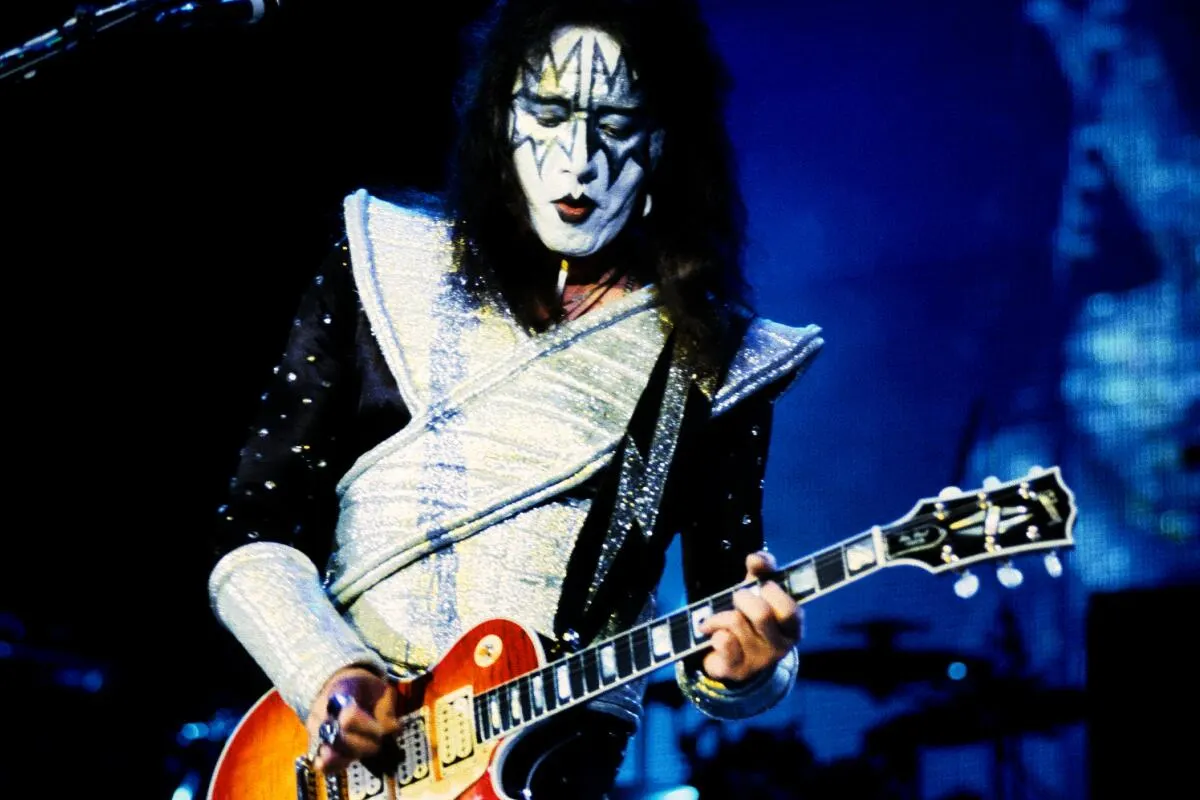
What if the story of a kid from the Bronx who got an electric guitar for Christmas to keep him out of trouble, and instead he explodes it into a supernova of smoke, fireworks, and face paint, thereby starting a rock revolution that still resonates in big arenas around the world, was told? That is the story of Ace Frehley, the mysterious “Spaceman” of Kiss, whose riffs defined the musical style of the time. At the age of 74, Frehley’s passing, which is said to have been caused by a fall followed by health issues, has infuriated fans by the hoax rumors and made them send a lot of tributes. His life was, in fact, a cosmic ride of victories, rock & roll hall of fame turmoil, and timeless music that started on earth and went to the sky. We are going to travel through the legacy of Ace Frehley, the man who made guitars breathe fire and rock ‘n’ roll feel like outer space, differently.
Who Was Ace Frehley?
Paul Daniel Frehley, better known as Ace Frehley, was the rhythm guitarist and backup vocalist for Kiss, but his impact transcended the band. Born April 27, 1951, in the Bronx, New York, to an electrical engineer father and a homemaker mother, Ace grew up as the youngest of three siblings in a working-class family. Nicknamed “Ace” at 16 by a bandmate for his card-sharp skills, he adopted it full-time, ditching “Paul” to avoid mix-ups with Stanley.
Early Sparks of Rebellion
Frehley’s youth was a powder keg of mischief and melody:
- Guitar Awakening: At 13, inspired by the Beatles and the Rolling Stones, he begged for lessons; his parents relented and bought him a Gibson Melody Maker, hoping it’d channel his energy.
- School Struggles: Expelled from multiple high schools for truancy and pranks, he dropped out but aced a General Equivalency Diploma, proving his smarts beneath the swagger.
- First Bands: By 15, he jammed in groups like the Molimo, honing a raw, bluesy style that blended Jimi Hendrix flair with Chuck Berry bounce.
Spotting a Village Voice ad in 1973, “Lead guitarist wanted with flash and ability”, Frehley auditioned for what became Kiss. His mom drove him there, and the rest? Interstellar history.
Ace Frehley’s Breakthrough with Kiss
Kiss exploded onto the scene in 1973, a New York quartet blending glam shock with comic-book theatrics. Frehley, alongside Paul Stanley (Starchild), Gene Simmons (Demon), and Peter Criss (Catman), crafted personas that turned concerts into spectacles. As Spaceman, Ace’s silver-starred makeup and rocket-themed outfits symbolized the band’s escapist fantasy.
The Makeup and Mayhem Era
Kiss’s early days were pure pandemonium:
- Debut Album (1974): Their self-titled LP bombed critically but sold steadily, thanks to tracks like Frehley’s “Cold Gin,” a boozy anthem co-written with Simmons.
- Live Extravaganzas: Shows featured levitating drums, blood-spitting demons, and Ace’s smoke-billowing guitar, earning them a rep as rock’s ultimate showmen.
- Commercial Surge: By 1975’s Kiss Alive!, they were arena kings, moving 10 million merch items annually, from lunchboxes to coffins.
Frehley’s everyman charm —he once quipped, “Onstage I’m Ace Frehley; offstage, I’m a kid from the Bronx” —made him the band’s relatable rogue.
Iconic Contributions to Rock Music
Ace wasn’t just a sideman; his songwriting and solos fueled Kiss’s golden age. Penned five Top 10 hits and countless fan favorites, blending gritty riffs with psychedelic edges.
Signature Songs and Solos
Frehley’s catalog sparkled with standouts:
- “Shock Me” (1977): From Love Gun, his lead vocal and wah-wah solo became a live staple, peaking at No. 47 on the Billboard Hot 100.
- “Rocket Ride” (1977): A spacey jam co-written with Sean Delaney, it showcased his melodic flair and reached No. 1 on Kiss’s singles chart.
- “New York Groove” (1978): A disco-rock cover that hit No. 9, proving Ace’s versatility beyond heavy riffs.
His Les Paul mastery, often rigged with pyrotechnics, defined Kiss solos, influencing axe heroes from Slash to Zakk Wylde. By 1978’s Double Platinum, Kiss had sold 75 million records, with Ace’s fingerprints on the chaos.
Solo Career and Frehley’s Comet
KISS’s 1982 non-makeup flop and internal clashes led Frehley to exit amid struggles with substance abuse. He launched Frehley’s Comet in 1984, a supergroup vibe with ex-Kiss producer Vinnie Vincent.
Post-Kiss Reinvention
Ace’s solo path was a comet’s tail of highs and hurdles:
- Debut Solo (1978): Released amid Kiss’s peak, it featured “New York Groove” and guest spots from Kiss cohorts, hitting No. 26.
- Frehley’s Comet Era: Five albums from 1984-1988, peaking with Rock and Roll Over’s “Into the Night” (No. 6 rock chart).
- Later Works: 2009’s Anomaly (No. 27 Billboard), 2014’s Space Invader, and 2024’s 10,000 Volts, his final bow with tracks like “Walkin’ On The Moon.”
Over 20 million solo records sold, Ace proved his star power endured, blending hard rock with pop hooks.
Personal Struggles and Triumphs
Frehley’s life offstage was a battlefield, marked by addiction that mirrored rock’s excesses. Heroin and alcohol derailed him, leading to arrests and band ousters.
Road to Redemption
From darkness to dawn:
- Rock Bottom (1982): Fired from Kiss after a blackout onstage; a 1983 overdose nearly killed him.
- Sobriety Milestone: Clean since 2006 after rehab, he credited his daughter Monique’s birth in 1984 as his anchor.
- Family Anchor: Married thrice, last to Jeanette since 2016, Monique co-produced his later albums, keeping him grounded.
Philanthropy followed: Ace supported sobriety programs and shared his scars to inspire. His 2011 autobiography, No Regrets, bared it all and hit bestseller lists.
The Final Days and Tragic End
Frehley’s fire went out in 2025. A late-September fall in the recording studio caused a brain hemorrhage that resulted in him being taken to Morristown Medical Center, where he was put on life support. At first, the “minor” reports were very different from what was actually happening. On October 6, he canceled his tour with the note “ongoing issues.” On October 15, rumors of his death were circulated, fake memorial pages received likes, and then his representative denied them. Yet, tragedy struck: Family removed life support on October 16, surrounded by loved ones. “Completely devastated,” they said, cherishing his “laughter and kindness.”
Timeline of the Heartbreak
- September 2025: Fall in New Jersey studio; hospitalized for intracranial hemorrhage.
- Early October: Cancels Antelope Valley Fair gig, then goes on a complete tour; fans feared the worst.
- October 16: Passes peacefully at 74; tributes pour from Pearl Jam’s Mike McCready to Eddie Trunk.
A hoax-to-horror twist amplified grief, highlighting digital pitfalls.
Tributes and Lasting Legacy
News rippled like a shockwave: Peter Criss posted, “My friend… I love you!” with a Spaceman pic. Stanley and Simmons called him an “irreplaceable rock soldier,” devastated yet grateful. McCready recalled a Kiss lunchbox “changing my life” at 11. Inducted into the Hall in 2014 sans makeup, Frehley’s Spaceman endures in holograms and fan lore.
Enduring Echoes
- Influence: Spawned hair metal; his riffs echo in Guns N’ Roses and Motley Crue.
- Merch Empire: Kiss’s $1B brand owes much to Ace’s cosmic cool.
- Rock Immortal: 100M+ records sold; his 2024 album proved he rocked till the end.
Frehley’s Comet streaked bright, leaving stardust for generations.
Final Riff on Ace Frehley’s Cosmic Ride
Ace Frehley’s story—the journey of his music from the basement of his Bronx home to the sky-high, explosive pyrotechnics—is basically the most classic of rock origin myths. However, his descent mutes the one power that most revolts of the times had: a guitar to which he literally screamed —but his riffs? They are going to be playing forever. Spaceman was the one who made us remember, in a world that is always looking for an escape, that life is too short not to dream big. What’s your favorite Ace moment, “Shock Me” solo or that ’76 rocket ride? Sound off below; let’s keep his groove alive.