
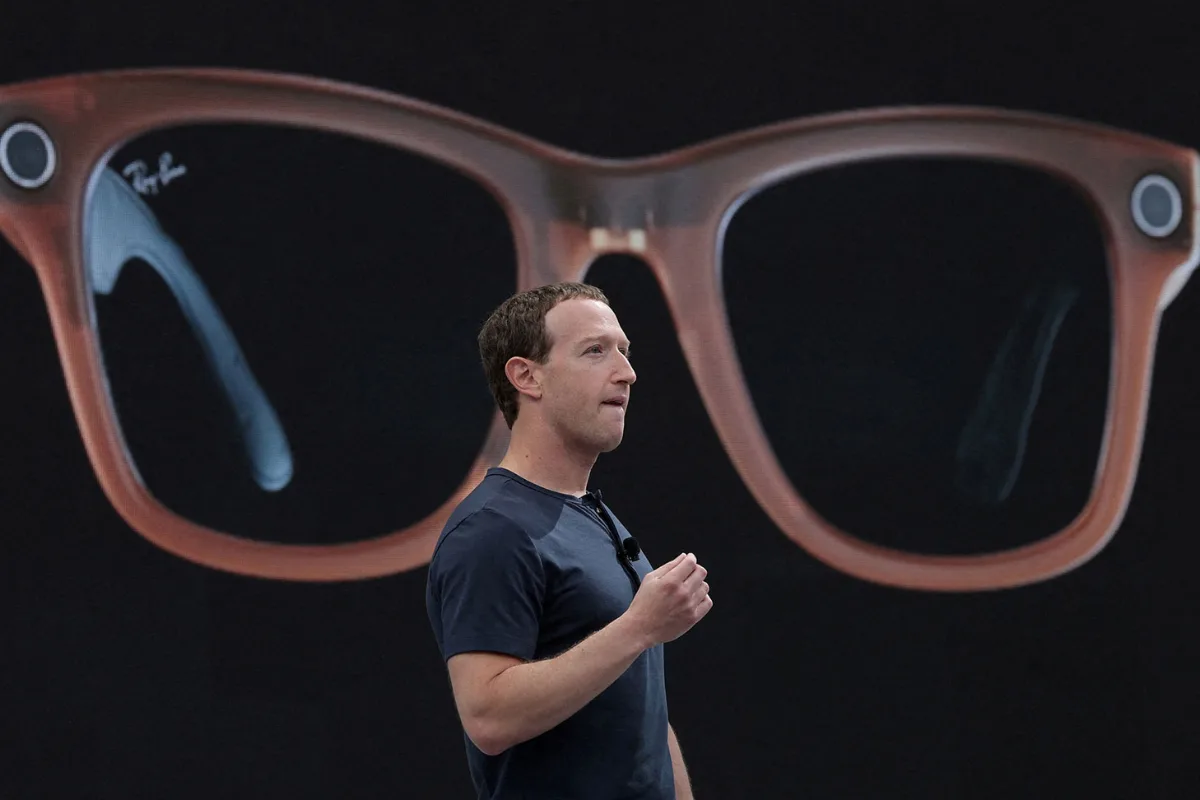
Mark Zuckerberg unveiled a three-pronged series of smart Meta glasses at Meta Connect 2025, which overtakes the limits of the AR system and the boundaries of innovative technology and artificial intelligence (AI). Ray-Ban and Oakley wearable glasses are the first companies to present a coherent blend of AI and style. Trending on X is the Meta Ray-Ban Display, Oakley Meta Vanguard, and Ray-Ban Meta Gen 2, and #MetaGlasses is blowing up as users are singing the praises of head-up displays, better cameras, and real-time AI support. These glasses are priced between $299 and $499. They are expected to bring AR to the ubiquity of smartphones, with features such as notifications, navigation, and even performance tracking, all without requiring a phone check. With EssilorLuxottica committing $3.5 billion to Meta, the wearable is even more innovative than ever before; it’s the future of wearables. We will take a closer look at these game changers, their features, and why they are a fascination to tech lovers across the globe.
The History of the Smart Meta Glasses Evolving With Meta.
The first step in the Smart Meta Glasses market was an agreement with Ray-Ban in 2023, which sold millions of units of Smart Meta Glasses that integrated both style and functionality, featuring cameras for taking photos, speakers for making calls, and AI for answering questions. Fast-forward to September 17, 2025, at the Menlo Park event called Meta Connect, Zuckerberg doubled down, launching three new models. This lineup isn’t just an update; it’s a leap toward “face computing,” where glasses become your always-on AI companion, overlaying digital info on the real world.
The Ray-Ban Display features a built-in heads-up display (HUD) in the right lens, displaying text, images, and videos without the need for external screens. The Oakley Vanguard targets athletes with helmet-compatible designs and Strava integration, while the Ray-Ban Gen 2 refines the original with better battery and cameras. Zuckerberg envisions a world where non-wearers face a “cognitive disadvantage,” echoing his metaverse ambitions but grounded in practical AR.
A leaked preview two days prior only heightened the hype, with X users speculating on pricing and features. Now, with full reveals, #MetaGlasses is trending, blending excitement over innovation with debates on privacy and addiction.
Key milestones in Meta’s glasses journey:
– 2023 Launch: Ray-Ban Meta sells millions, pioneering camera/audio AI.
– 2025 Investment: $3.5B stake in EssilorLuxottica for Ray-Ban/Oakley access.
– Connect 2025: Three models unveiled, focusing on AR displays and sports.
– AI Integration: Meta AI chatbot for real-time queries and overlays.
– Future Vision: Glasses as primary computing interface by 2030.
Meta Ray-Ban Display: AR Meets Everyday Style
The star of the show, the Meta Ray-Ban Display ($399), transforms classic Wayfarers into an AR powerhouse. A micro-LED projector in the right arm beams monochrome green text, images, and videos onto the lens; think notifications, maps, or TikTok clips without glancing at your wrist. Touch controls on the arm let you swipe, tap, or nod to interact, while Meta AI responds to voice commands like “Show me directions to coffee.”
We tested it in London: A quick “Hey Meta, translate this menu” overlaid French to English in real-time. The battery lasts for 4 hours of heavy use (36 hours of standby) and charges via a case that adds eight complete cycles. Privacy features include a visible LED for recording and end-to-end encryption. At $399, it’s pricier than basic Ray-Bans but a steal compared to Apple’s $3,500 Vision Pro.
Standout features of Ray-Ban Display:
– HUD Tech: Green monochrome display for texts, images, and videos on the lens.
– AI Smarts: Voice-activated Meta AI for queries, translations, and reminders.
– Camera Upgrades: 12MP sensor for 3K video, slow-mo, hyperlapse modes.
– Battery Life: 4 hours active, 36 hours standby; case adds 32 hours.
– Controls: Touch arm for swipe/tap; open-ear speakers for audio.
Oakley Meta Vanguard: Built for the Thrill-Seekers
For adrenaline junkies, the Oakley Meta Vanguard ($499) reimagines performance shades with smart tech. Designed for sports like cycling or skiing, the frames have controls on the bottom arm for helmet compatibility, plus three interchangeable nosepads for fit. Prizm lenses (swappable) enhance visibility in varying light, while integrated Strava and Garmin syncs provide real-time stats: “Hey Meta, what’s my pace?”
The AI auto-captures milestones, hitting a speed, altitude, or distance, overlaying stats on footage for instant highlights. We tried it on a simulated trail: Seamless voice feedback kept eyes forward, and the 12MP camera snagged 3K clips without fumbling. Battery matches the Ray-Ban at 4 hours active, with a rugged case for on-the-go charging. Available October 29 in four colors, it’s a must for athletes ditching smartwatches.
Vanguard’s athlete-focused perks:
– Sports Design: Bottom controls for helmet use; three nosepads included.
– Fitness Integration: Strava/Garmin sync for live metrics and auto-captures.
– Lenses: Swappable Prizm for low-light, high-contrast vision.
– Durability: IPX4 water-resistant; rugged build for action.
– Colors: Four radical options, launching October 29 at $499.
Ray-Ban Meta Gen 2: Refined Everyday Essential
The Ray-Ban Meta Gen 2 ($299) polishes the original with upgrades that make it the entry-level smart pick. Identical styling; Wayfarer, Headliner, Skyler frames; but with a 2x better 12MP camera for 3K video, slow-mo, and hyperlapse. Battery doubles to 8 hours mixed use, and new seasonal colors (Cosmic Blue, Shiny Asteroid Grey, Mystic Violet) add flair.
Meta AI gets smarter, handling multimodal queries like “What’s that landmark?” via camera. Open-ear speakers deliver calls and music discreetly, while touch controls keep it hands-free. Available today, it’s ideal for urban explorers wanting smarts without the AR bells. Our London test: Crystal-clear 3K selfies and AI navigation turned a walk into an adventure.
Gen 2 enhancements:
- Camera Boost: 12MP for 3K video, slow-mo, hyperlapse modes.
- Battery: 8 hours mixed use, up from 4 in Gen 1.
- Colors: New seasonal shades for Wayfarer, Headliner, and Skyler.
- AI: Multimodal queries using camera for real-world info.
- Price: $299, available immediately.
Why Meta Glasses Are the Hot Topic in the News Industry Today?
Meta Connect’s announcements have #MetaGlasses trending with 1M+ X mentions, fueled by Zuckerberg’s bold claims and hands-on demos. Users geek out over AR overlays: “Finally, directions without phones!”While athletes hype Vanguard’s Strava sync. Privacy concerns bubble up, with posts questioning always-on cameras, but excitement dominates, with @Wired tweeting “Meta’s glasses just got way smarter” (50K likes).
The leak two days prior added buzz, turning speculation into frenzy. As Apple and Google lag in consumer AR, Meta’s $3.5B EssilorLuxottica bet positions them as leaders.
Trending topics:
– AR Hype: HUD displays for notifications, maps, videos.
– Sports Tech: Vanguard’s auto-captures and fitness integrations.
– X Chatter: 1M+ #MetaGlasses posts post-Connect.
– Privacy Debates: Visible LEDs and encryption ease concerns.
– Market Lead: Millions sold since 2023, outpacing rivals.
The Future of Wearables and Ethical Concerns
Zuckerberg’s vision: Glasses to be the next computing platform and less phone dependency. They would be able to change their daily life with AI doing the translations, reminders, and social media. Nevertheless, ethical obstacles are imminent: privacy of data, dependency, and social isolation of non-adopters. End-to-end encryption and recording LEDs in metadata do help address some of these concerns, but skeptics are concerned about potential spying. The combination of style and smarts is the winner in the case of Meta, compared to Snap Spectacles or Google Glass, which failed. Access at 299-499 will expand the market, reaching 100 million users by 2030.
Conclusion
The new Smart Meta Glasses , including the Ray-Ban Display, Oakley Vanguard, and Gen 2 Ray-Bans, created by Meta, are not accessories; instead, they are a preview of how AR will succeed in the mainstream. Being innovative in their approach and outlook, they ensure a world where AI will not distract, but will improve. Since X is dominated by a company called #MetaGlasses, it is evident that Zuckerberg is winning his bet against your face. Want to make the world brighter? Take two and be a part of the revolution.