
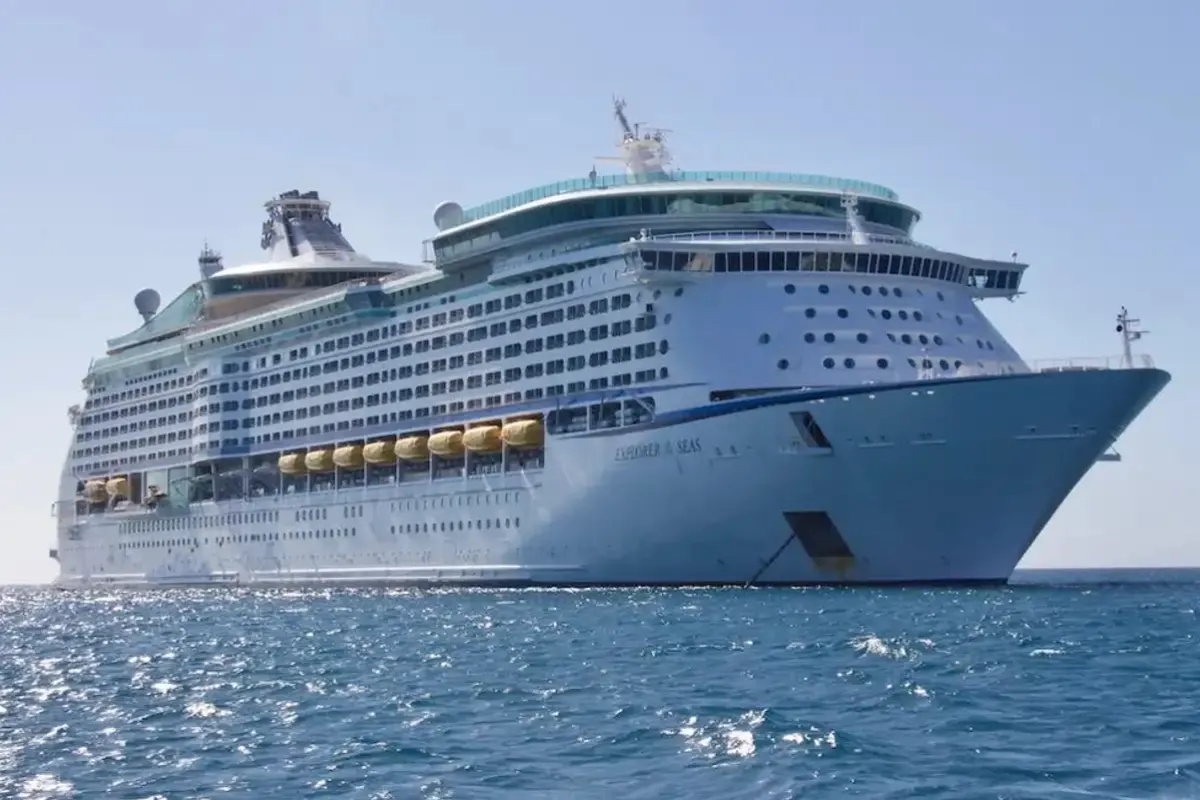
On the night of September 28, 2025, as the sun was setting over the Caribbean Sea, a simple detour for the Royal Caribbean cruise ship Enchantment of the Seas turned into a phenomenal act of saving lives and sharing love. While en route from Tampa, Florida, to Costa Maya, Mexico, the crew of the vessel spotted a homemade raft carrying approximately 12 people in distress, which was partially submerged due to the waves. The next thing that happened was a quick rescue operation, which allowed the team to provide the group with water and security as their first aid before handing them over to the police at the port.
For American travelers who view cruises as idyllic escapes, think sun-soaked decks and tropical ports, this story underscores a vital, often unseen role of the industry: maritime humanitarianism. According to reports, the raft was located to the west of Cuba and to the east of Mexico, which means the crew attempted to avoid Hurricane Humberto and Tropical Storm Imelda. This is just one of those incidents that demonstrate how weather systems can surprisingly intertwine destiny with luck. Through this detailed investigation of the Royal Caribbean cruise ship rescue, we will learn about the event, discover what the ship can do, gain insight into sea rescues in a broader context, and understand what it signifies for cruisers embarking on a trip like yours.
We are a country of sea lovers, from East Coast retirees to Midwest families, and these stories serve as a reminder that the ocean is our common denominator and sometimes, our lifesaver.
The Dramatic Sequence of the Enchantment of the Seas Rescue
The Enchantment of the Seas, a Vision-class ship launched in 1997 and homeported in Tampa, was midway through a five-night Bahamas itinerary when bad weather forced a reroute. Bound initially for Nassau and Perfect Day at CocoCay, the captain altered course to skirt the outer bands of Tropical Storm Imelda and the expansive reach of Hurricane Humberto, placing the vessel in a less-traveled stretch of the Caribbean. It was around dusk, roughly 7:00 p.m. local time, when lookouts on the bridge detected faint lights signaling distress about a mile off the starboard bow.
The tense moments were captured in passenger footage, shared widely from the decks, which showed the flooding lights of the massive ship illuminating a simple raft made of barrels and tarps, overcrowded and listing dangerously. The 12 individuals, probably migrants who had a dangerous journey from Central America or Cuba, were sailing their boat that was taking on water and was about to break apart, and thus were waving improvised signals. In a short time, the crew dispatched a rigid-hull inflatable boat (RHIB) with trained rescue personnel, who used the rough sea to reach the raft.
The team that went on board the survivors one after another checked for injuries, although there were none, and provided water, blankets, and a brief medical check in the ship’s infirmary. The group, described as exhausted but relieved, was allowed to stay overnight in safe rooms before the Enchantment arrived at Costa Maya on September 29. Then the Mexican authorities took over for processing. Royal Caribbean’s swift action, in conjunction with the U.S. Coast Guard and local maritime services, facilitated the implementation of international regulations under the Safety of Life at Sea (SOLAS) Convention.
- Timeline Breakdown: Spotting at 7:00 p.m.; RHIB launch by 7:15 p.m.; all aboard by 7:45 p.m.; authorities notified en route.
- Crew Training: Every Royal Caribbean vessel drills monthly for man-overboard and distress scenarios, emphasizing rapid deployment.
- Passenger Role: Onlookers from the Lido Deck offered cheers and supplies, turning a somber moment into communal support.
This wasn’t blind luck; it was a preparedness meeting opportunity in hurricane alley.
The Enchantment of the Seas Vessel and Its Rescue Capabilities
Built at the Chantiers de l’Atlantique shipyard in France, the Enchantment of the Seas stretches 965 feet long, accommodating 2,730 passengers with amenities like rock-climbing walls, Broadway-style shows, and a nine-hole mini-golf course. Refurbished in 2020 with new staterooms and dining venues, it’s a floating resort, but also a certified lifeboat for the high seas. Equipped with four RHIBs, each seating 25, and a medical bay staffed by U.S.-licensed doctors, the ship doubles as a rescue asset when needed.
In this Royal Caribbean cruise ship rescue, the vessel’s radar and thermal imaging played key roles in detection, scanning 20 nautical miles for anomalies amid the storm’s clutter. The bridge team’s decision to investigate, halting the 22-knot cruise, exemplifies the company’s “zero tolerance for inaction” policy on distress signals. Following the rescue, the ship resumed its itinerary with minimal disruption, arriving in Cozumel on schedule.
For American cruisers eyeing Royal Caribbean’s 27-ship fleet, this event spotlights built-in safety: all vessels carry satellite phones for Coast Guard liaison and sufficient provisions to sustain extra passengers for days.
- Tech On Board: AIS (Automatic Identification System) tracks nearby vessels; EPIRBs (Emergency Position-Indicating Radio Beacons) summon help instantly.
- Capacity Boost: The infirmary handles 50+ patients, and the galleys produce 10,000 meals daily, scalable for surges.
- Historical Refits: Added LED lighting and stabilized tenders in 2020 for better night ops.
These features make luxury liners unwitting guardians of the Gulf.
Cruise Lines’ Broader Role in Maritime Rescues
Royal Caribbean is not a surprise when these high-stakes interventions occur; the industry records hundreds of such incidents each year, often in the Straits of Florida, where the number of migrant crossings reaches its highest point. In February 2025, the Brilliance of the Seas, which was sailing from New Orleans, had to change its route to go and rescue 11 Cuban nationals who were bailing water from a sinking skiff between Havana and Mexico. Randle Roper, CEO of VACAYA, a passenger, described the scene to us: refugees with a white flag in their hands, the crew preparing a tender amid the waves, and the group “malnourished but in great spirits” after their Gulf ordeal, arriving.
It is a repetition of a crisis pattern: The Paradise of Carnival saved six lives in August 2025, while the Breakaway of Norwegian took twenty people off the rafts in mid-August. Between 2020 and 2025, data from the U.S. Coast Guard indicates that cruise ships assist over 1,000 migrants annually, their size and speed making them well-suited for rescue operations in the vast sea. Legal mandates under SOLAS require assistance, but companies like Royal Caribbean go above and beyond with dedicated humanitarian coordinators.
Challenges persist: rescues delay itineraries (up to 6 hours here), and geopolitical tensions complicate handoffs. Yet, for Americans whose vacations fund these ops, via $100-200 port fees, they’re a point of pride, blending leisure with legacy.
- Annual Stats: 200-300 cruise-assisted rescues in the Caribbean; 70% involve migrants.
- Coordination Hubs: Miami’s Joint Rescue Coordination Center oversees Gulf ops.
- Ethical Edge: Crews trained in cultural sensitivity for diverse survivors.
Cruises aren’t just getaways, they’re lifelines.
The Human Stories Behind the Royal Caribbean Cruise Ship Rescue
The identities of the 12 people rescued are being kept confidential for their safety, but the context surrounding the event speaks volumes. They might have been Venezuelans or Haitians who decided to leave their countries due to severe economic conditions, which were a consequence of the regional unrest in 2025. To escape such hardships, they chose to travel more than 500 miles in a raft that was not suitable for open waters. Both the currents and their desperation drove them. Reports from survivors of such rescues tell a remarkably similar story of hunger, sun, scorched skin, and hopes whispered about reaching the U.S., only to be saved by the light of a cruise ship.
What is similar in this case is that the Brilliance, after several days of bailing, decided to send rescuers their tears of relief along with their “white flag,” which was a bedsheet torn for a signal. On the Enchantment, it was described that the raft was so fragile that the passengers could see the barrels tied with rope, the tarps flapping, and this image reminded them of the 2022 Symphony of the Seas rescue of 20 Cubans. All these facts tell us stories that make statistics less abstract: behind every tender launch is a family that has been reunited and a journey that has been rerouted from a tragedy.
Such events in the U.S. evoke sympathy in families tied to the migration issue, particularly among those with relatives who have already crossed the border. Moreover, these rescues serve as a bridge between vacation vibes and real-world grit.
- Standard Profiles: 60% families with children; journeys average 3-7 days without engines.
- Emotional Aftermath: Onboard counseling; many pursue asylum upon landing.
- Passenger Impact: Many tip crews extra, turning awe into appreciation.
Stories like these fuel calls for humane policies.
Safety Protocols and What Cruisers Should Know
For the 30 million Americans who cruise yearly, Royal Caribbean’s response reassures: every embarkation includes safety briefings on muster drills and emergency procedures. Post-rescue, the company debriefs crews and notifies insurers, minimizing passenger stress, and delays are reduced by just two hours.
Travelers: Pack IDs and monitor apps like CruiseMapper for reroutes. Respect crew boundaries during operations. In distress zones, ships prioritize signals over schedules.
- Passenger Prep: Life vests auto-inflate; apps alert for drills.
- Insurance Angle: Policies cover delays; rescues don’t hike premiums.
- Future Safeguards: AI radar enhancements testing in 2026.
Knowledge empowers your sea adventure.
Why Royal Caribbean Cruise Ship Rescues Matter to American Travelers
The Enchantment of the Seas rescue isn’t a one-off incident; it’s a symbol of the shipping industry’s quiet bravery throughout the turbulent seas of 2025. For families from Seattle to Savannah who have booked cabins, it is a strong message that cruises are not only safe but also have a heart. As the climate continues to cause more disruptions, these events will become more frequent, thus weaving humanitarian threads into the fabric of vacations.
What is the legacy of the Royal Caribbean? More than 100 rescues since 2010, a demonstration that compassion is the absolute luxury that stays afloat. Were you on one of their ships? Then, please share your story with us below. Together, we can give credit to the crews that guide us in the right way.