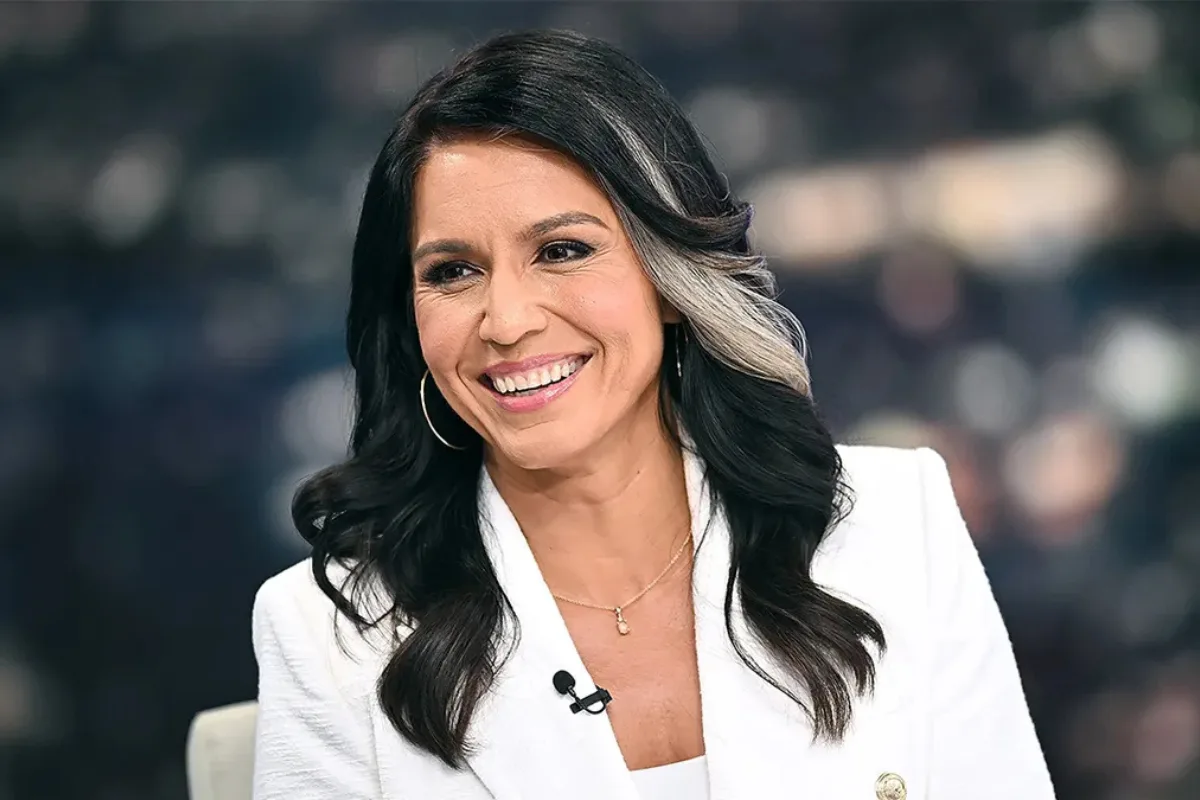
Think about it: The FBI publicly and aggressively disagrees with a proposal that would give control of counterintelligence to a politically unpredictable person. This is the main event of the high-stakes drama that Washington is grappling with on October 29, 2025. The FBI’s scathing letter in response to DNI Director Tulsi Gabbard’s request for more authority has caused people to search for “Tulsi Gabbard” by 500%, according to Google Trends, which is even more than her 2024 VP buzz. This is not just a fight between different departments of the same government; it is a clash that is testing the post-9/11 intelligence restructuring, with Gabbard being the main character.
Her journey from a Hawaii war veteran to a Trump cabinet minister whom he fired is her attempt to gain more power against the agencies’ resistance, and America is totally hooked. Will she remodel the espionage world or set it ablaze? Let’s analyze the dispute, her ascent, and the reasons why this power play might change the face of national security.
The FBI Letter Ignites Tulsi Gabbard’s Latest Firestorm
The spark? A leaked FBI memo to Congress, obtained by The New York Times, criticizes a House bill that would designate the Office of the Director of National Intelligence (ODNI) as the federal counterintelligence czar. Penned with Kash Patel’s stamp, Trump’s FBI pick, the unsigned letter decries “strong objections” to ODNI usurping FBI turf on threats from China, Russia, and beyond. Gabbard’s draft endorsement? It allegedly glossed over dissent, claiming community-wide buy-in, according to intelligence insiders.
This surfaces amid Intelligence Authorization Act talks, where House hawks like Rick Crawford decry U.S. “reactivity” to foes on a “war footing.” The bill empowers ODNI’s National Counterintelligence and Security Center, Gabbard’s shop, to warn firms of espionage, potentially sidelining the FBI’s 7,000-strong counterspy force. Senate Democrats, such as Mark Warner, cry foul, arguing that “That’s not what ODNI was created for,” which risks “turf battles” and operational disruptions. Trending because it’s personal, Gabbard’s ally Joe Kent’s probe into Charlie Kirk’s death has already rifled through FBI files, stoking paranoia. For Americans eyeing election meddling and cyber hacks, this feels like insider baseball with real stakes: Who guards the guardians?
Tulsi Gabbard’s Meteoric Rise from Battlefield to Beltway
Born April 12, 1981, in American Samoa to a Hindu mother and Catholic-Marxist dad, Tulsi Melei Gabbard grew up in Hawaii’s Big Island, surfing waves and absorbing her dad’s state senate seat. At 17, she enlisted in the Hawaii Army National Guard, deploying to Iraq in 2004 as a combat medic, earning a Combat Medical Badge amid convoy patrols. Back home, she shattered barriers: Elected to the state House at 21 (youngest ever), then U.S. Congress in 2013 at 32, repping Hawaii’s 2nd District as a Democrat.
A four-term rep, Gabbard grilled Big Pharma and war hawks, co-chairing the Progressive Caucus while eyeing the Oval. Her 2020 presidential run? A splashy anti-interventionist bid, drawing Bernie fans before bowing out. By 2022, cracks showed: Quitting the DNC over “rigged” primaries, she flirted with RFK Jr. before Trump’s orbit. Confirmed as DNI in January 2025, she’s Trump’s intelligence tsar, overseeing 18 agencies, 100,000 personnel, and an $80B budget. Critics dub her “unqualified”; fans hail the outsider shake-up. This counterintel push? Her boldest swing yet, echoing Trump’s disdain for “deep state” bloat.
Pivotal Moments in Her Political Arc
- Iraq Deployment (2004-05): Frontline grit shaped her anti-war stance.
- Congressional Trailblazer (2013): First Hindu lawmaker, first female combat vet in House.
- 2020 White House Bid: A Vegan Surf Mom Meets a Foreign Policy Wonk.
- Party Switch (2022): DNC fallout to independent, then Trump ally.
- DNI Confirmation (2025): Narrow Senate win amid spy community skepticism.
Unpacking the Counterintelligence Power Grab
At heart, it’s about control. After the attacks on the World Trade Center and the Pentagon in 2001, the Office of the Director of National Intelligence (ODNI) coordinates the activities of the FBI, which carries out operations against domestic spies, deters foreign agents, and safeguards secrets. The effect of Gabbard’s bill would be to reverse that: the ODNI would be in charge of investigations, sharing intelligence more quickly, and providing early warnings to the private sector about hacks. Among the others, the House China Committee, which supports the bill, considers it a necessary tool to fight the CCP “espionage networks.” The FBI, however, argues in response that such a move would separate the operations of different units, double the workload, and gradually lead to a loss of skills.
Propositions of Gabbard sound like an overwhelming danger. She has fired the election security team at ODNI, the unit responsible for global trends, as well as the National Intelligence University, which has had 20% of its staff reduced under the pretext of “efficiency.” The president’s daily briefing? It was relocated from the CIA to the ODNI headquarters and then quietly reverted due to the uproar. Kent’s function at the NCTC investigating the murder of Kirk was an incursion into the FBI territory, which was looking into the files without permission. Warner blasts it as “dismantling key functions” for “operational control.” Senate’s softer tack? Task Gabbard to map consolidations, preserving FBI primacy.
Key Stakes in the Debate
- FBI’s Edge: Decades of fieldwork; risks dilution in ODNI’s “strategic” focus.
- ODNI’s Vision: Holistic threats, faster private-sector alerts on China spies.
- Trump’s Angle: Pare post-9/11 bloat; Gabbard as hatchet woman.
- Critic Concerns: Turf Wars Hobble Responses to Russia/Iran Hacks.
For everyday Americans, it’s spy thriller meets policy wonk: Better hacks busted, or bureaucratic mess?
Tulsi Gabbard’s Controversies Fuel the Fire
Gabbard’s no stranger to heat. 2017’s Assad meeting? Labeled “apologist” by Dems. Hindu nationalist ties? Accusations of “dog-whistling.” 2024 VP nod? Trump’s olive branch to MAGA moderates. As DNI, she has clashed with Patel, once allies who are now rivals, over intelligence purges. Her counterintel pivot? Seen as empire-building, per Warner: “Puts it in direct tension with agencies it supports.” Yet supporters like Crawford eye reform: “Reactive, complacent” no more.
Off-duty? Gabbard’s a surfer yogi, authoring “For Love of Country: Leave the Democratic Party Behind.” Married to Abraham Williams since 2015, no kids, focusing fire on foreign foes.
What’s Next for Tulsi Gabbard and U.S. Intel
House-Senate horse-trading on the IAA could be wrapped up by December, with Gabbard’s role hinging on the compromises. If passed, ODNI will lead counterintelligence by 2026, streamlining or sabotaging? Trump supports a reduced ODNI body; Gabbard is carrying out the work, but what is the cost? Ripples: Unsecure elections during the 2026 midterms, and cyber threats from Beijing.
Intel Gabbard is the trending story of an insurgent, a tough veteran, and a person who has not been defeated. Will she reshape the intelligence agency into a leaner one or weaken the agency? For security-savvy Americans, it is a Beltway ballet that they cannot miss. Watch C-SPAN; the subsequent leak could be the game-changer. What is your opinion about the turf war?