
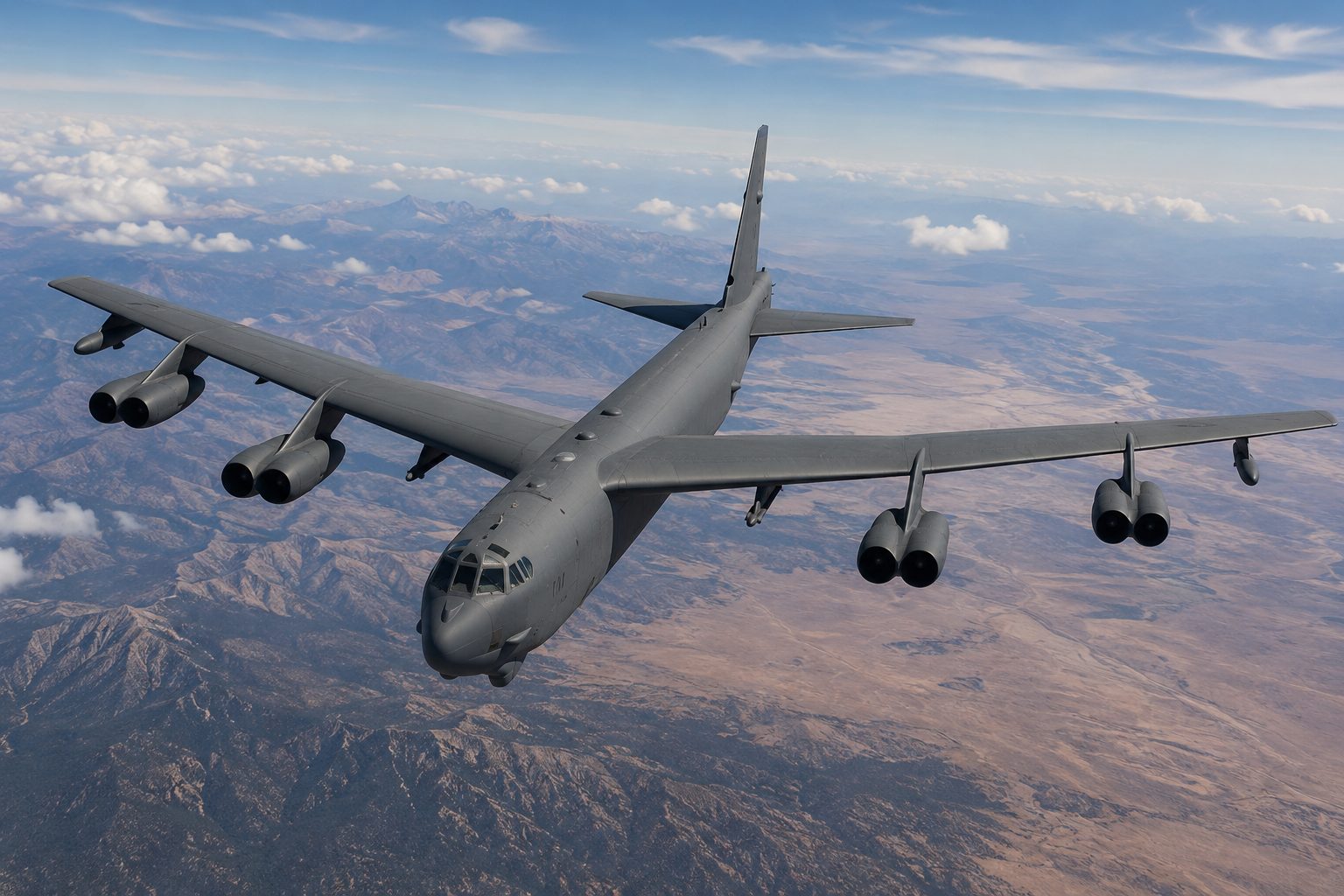
The B52 Bomber is one of the most recognizable military aircraft ever built, which is alos known for its massive size, long-range capabilities, and unmatched durability. The aircraft has remained a key part of the United States Air Force for more than 70 years. While many military planes have come and gone, the B-52 continues to serve and adapt to modern warfare, which makes it one of the most successful aircraft in aviation history.
From the Cold War era to present-day military operations, the B-52 has played a critical role in protecting national interests and demonstrating air power around the world.
The Origins of the B-52 Bomber
During the late 1940s and early 1950s, the B-52 Stratofortress was developed by Boeing. At that time, military leaders needed a long-range bomber capable of carrying heavy payloads over great distances without relying on overseas bases.
The aircraft first flew in 1952 and officially entered service with the U.S. Air Force in 1955. Its design focused on endurance, speed, and the ability to carry conventional and nuclear weapons.
What started as a Cold War deterrent quickly became one of the most important strategic bombers ever produced.
Impressive Design and Specifications
One of the reasons the B-52 has remained relevant for decades is its remarkable design.
The aircraft measures approximately 159 feet in length and has a wingspan of about 185 feet. Powered by eight jet engines mounted beneath its wings, the bomber can reach speeds exceeding 650 miles per hour.
- Crew of five members
- Maximum takeoff weight of over 488,000 pounds
- Range of more than 8,800 miles without refueling
- The aircraft can hold up to 70,000 pounds of weapons
- High-altitude and long-endurance performance
These capabilities allow the aircraft to conduct missions across continents while remaining highly effective in a variety of operational environments.
Role During the Cold War
The Cold War was one of the most significant periods in the B-52’s history.
During this era, the bomber served as a critical component of America’s nuclear deterrence strategy. Aircraft were often kept on alert, ready to respond if tensions between major powers escalated into conflict.
The mere presence of the B-52 helped maintain strategic balance. Its ability to deliver nuclear payloads across vast distances made it a powerful symbol of military strength.
Combat Operations Around the World
Although originally designed as a nuclear bomber, the B-52 has participated in numerous conventional military operations.
Vietnam War
One of the aircraft’s most notable deployments occurred during the Vietnam War. B-52 bombers conducted large-scale bombing missions aimed at disrupting enemy supply routes and military infrastructure.
Gulf War
During the 1991 Gulf War, the B-52 once again proved its value. The bomber flew long-range missions and delivered precision strikes against strategic targets.
Military analysts noted that a relatively small number of B-52 aircraft were responsible for a substantial portion of the bombs dropped during the conflict.
Operations in Afghanistan and Iraq
Following the events of September 11, 2001, B-52 bombers played an important role in military operations in Afghanistan and Iraq.
Equipped with advanced targeting systems and precision-guided weapons, the aircraft provided close air support and strategic strike capabilities.
It has the ability to remain airborne for extended periods allowed commanders to respond instantly to changing battlefield conditions.
Continuous Modernization
Most aircraft are retired after a few decades of service. The B-52, however, has benefited from continuous modernization programs that have extended its lifespan far beyond initial expectations.
- Advanced radar systems
- Modern communication equipment
- Precision weapon integration
- Improved navigation technology
- Enhanced electronic warfare capabilities
These improvements have transformed a Cold War-era bomber into a highly capable modern combat platform.
The Air Force continues investing in upgrades to ensure the aircraft remains effective against evolving threats.
Why the B-52 Remains Relevant?
Many people wonder how an aircraft designed in the 1950s can still serve effectively today.
The answer lies in flexibility.
Unlike some specialized military aircraft, the B-52 can perform a wide range of missions. It can carry conventional bombs, precision-guided munitions, cruise missiles, and other advanced weapons.
Its large payload capacity allows military planners to adapt the aircraft for different operational requirements.
Additionally, modern technology upgrades have enabled the bomber to integrate with today’s advanced defense systems.
As a result, the B-52 remains one of the most versatile aircraft in military service.
What is the Future of the B-52 Fleet?
Military officials expect the B-52 to remain operational well into the future.
Current modernization plans include replacing aging engines with more efficient models and upgrading onboard systems. These improvements are expected to increase fuel efficiency, reduce maintenance costs, and enhance overall performance.
Some experts believe the aircraft could remain in service until the 2050s or beyond.
If that happens, the B-52 would achieve an extraordinary milestone of serving for nearly a century.
Very few aircraft in aviation history have demonstrated such longevity.
Interesting Facts About the B-52 Bomber
Here are some fascinating facts about this legendary aircraft.
1. It Has Served Multiple Generations
Pilots flying today’s B-52s were not even born when the aircraft first entered service.
2. It Uses Eight Engines
Most large military aircraft operate with fewer engines, but the B-52 continues to rely on eight jet engines for power.
3. It Can Fly Global Missions
With aerial refueling support, the aircraft can conduct missions almost anywhere in the world.
4. It Has Seen Combat for Decades
Few military aircraft have participated in as many conflicts and operations as the B-52.
5. It Continues to Receive Upgrades
The aircraft’s ongoing modernization makes sure it remains effective despite its age.
What is the Legacy of the Stratofortress?
The B-52 Stratofortress is more than just a military aircraft. It represents decades of innovation, strategic planning, and operational excellence.
Its ability to adapt to the change military requirements has allowed it to remain relevant long after many other aircraft were retired. If serving as a nuclear deterrent during the Cold War or supporting modern combat missions, the bomber has consistently demonstrated reliability and effectiveness.
As modernization efforts continue, the B-52 is expected to remain a key part of military operations for years to come. Its remarkable history and enduring performance have secured its place as one of the most iconic aircraft ever built.